collapse
Hysterectomy in Brooklyn
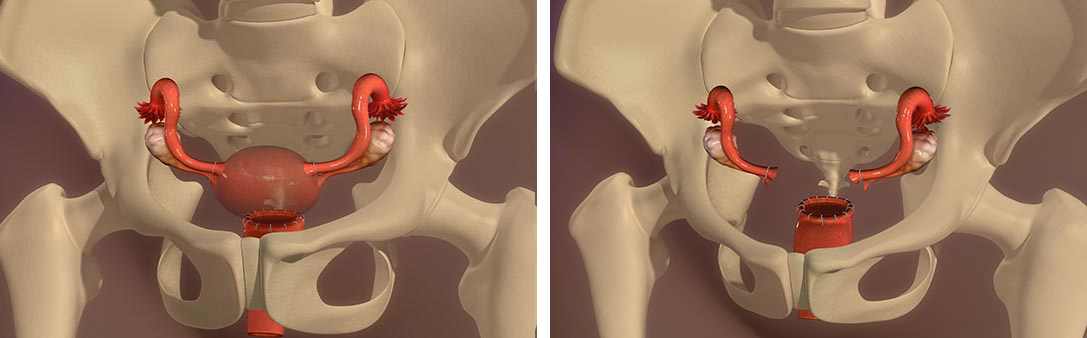
A hysterectomy is surgery to remove the uterus. The uterus is the part of a woman’s body that carries a baby if she is pregnant. Another word for uterus is “womb.” If you have a hysterectomy, you will never be able to carry a pregnancy.
Hysterectomy FAQ
Are There Different Kinds of Surgery for Hysterectomy?
Yes, there are 4 main kinds of surgery:
- Abdominal hysterectomy – To do an abdominal hysterectomy, the doctor makes a cut in the belly and removes the uterus through that opening
- Laparoscopic hysterectomy – To do a laparoscopic hysterectomy, the doctor inserts a tiny camera and tools through small openings in the belly. Then he or she removes the uterus bit by bit through one of the holes or through the vagina.
- Robotic hysterectomy – In a variation of the laparoscopic approach, the tools used for the surgery are attached to a robot that the doctor controls. This is called “robot-assisted laparoscopy.”
- Vaginal hysterectomy – To do a vaginal hysterectomy, the doctor makes cuts inside the vagina and removes the uterus through the vagina. Vaginal hysterectomy leaves no visible scars, but it is not always possible. Sometimes doctors do vaginal hysterectomy but also use the tools used in laparoscopic hysterectomy. This is called a “laparoscopic-assisted vaginal hysterectomy.” If this approach is used, the uterus is removed through the vagina.
A hysterectomy might be done to treat and of the following:
- Abnormal bleeding – Some women bleed too much during their period or at times when they should not be bleeding. This can lead to a condition called anemia, which can make you feel very tired.
- Fibroids – Fibroids are tough balls of muscle that form in the uterus. They can get very big and press on the organs inside the belly. They can also cause abnormal bleeding.
- Pelvic organ prolapse – Pelvic organ prolapse is when the uterus falls down into the vagina
- Cancer or conditions that could lead to cancer – Cancer can affect the uterus or the cervix, the organ that separates the uterus and the vagina. Sometimes doctors suggest removing these organs if they show signs that cancer is about to form.
- Ongoing pelvic pain – Some women feel pain that will not go away in the area just below the belly. This is called “chronic pelvic pain.” Hysterectomy can sometimes help cure this pain.
Many of the conditions that are treated with hysterectomy can be treated in other ways instead. If you do not want the surgery, ask your doctor or nurse if you have other treatment options. Ask, too, what will happen if you do NOT have a hysterectomy.
If you have a hysterectomy, you will not be able to get pregnant. Unfortunately, if you have cancer or another serious problem, you might not be able to avoid having a hysterectomy. If you want to have children, speak to your doctor or nurse about your options.
That depends on what you want and why you are having a hysterectomy. During a hysterectomy, doctors sometimes also remove the:
- Cervix – For a vaginal hysterectomy, the cervix must be removed. For an abdominal or laparoscopic hysterectomy, the cervix can be removed or left in place. If the cervix is removed, it is called a total hysterectomy. If the cervix is left in place, it is called a subtotal or supracervical hysterectomy.
- Ovaries and fallopian tubes – The ovaries are the organs that make eggs (which can become a baby) and female hormones, including estrogen and progesterone. The fallopian tubes carry eggs from the ovaries to the uterus. The hormones made by the ovaries help keep bones healthy and are important for other aspects of health. Women who have their ovaries removed sometimes need to take hormone pills.
If you are planning to have a hysterectomy, ask your doctor whether he or she is planning to remove your cervix and your ovaries and fallopian tubes. It is important to know this, because women who do not have a cervix need different medical care than women who do. Likewise, women who do not have ovaries sometimes need different medical care than women who do.
Deciding whether or not to have your ovaries removed can be tough. You will need to think about how old you are, and about how not having ovaries might affect you.
In women who have not yet been through menopause, having the ovaries removed can lead to hot flashes, bone loss, reduced interest in sex, and other problems. In women who have been through menopause, having the ovaries removed might also increase the risk of health problems, such as heart disease, but the research is still not clear. On the other hand, women who have health problems that get worse at certain times in the menstrual cycle sometimes feel better without their ovaries. Plus, in rare cases, the ovaries can develop cancer, so women sometimes choose to have them removed. Before you have surgery, ask your doctor about the pros and cons of having your ovaries removed.
The fallopian tubes are not needed if a woman is not going to get pregnant. They can be removed at the time of hysterectomy, even if the ovaries are left behind. This can lower the risk of a rare type of cancer that can start in the fallopian tubes.
Studies show that women can have happy, full lives after a hysterectomy. Many women feel better after the surgery, because they no longer have the symptoms that bothered them before.
Request Your Endometrial Ablation Consultation in Brooklyn
If you would like to learn more if Endometrial Ablation is right for you, consult our doctors in Brooklyn. Get started by filling out the form below.